




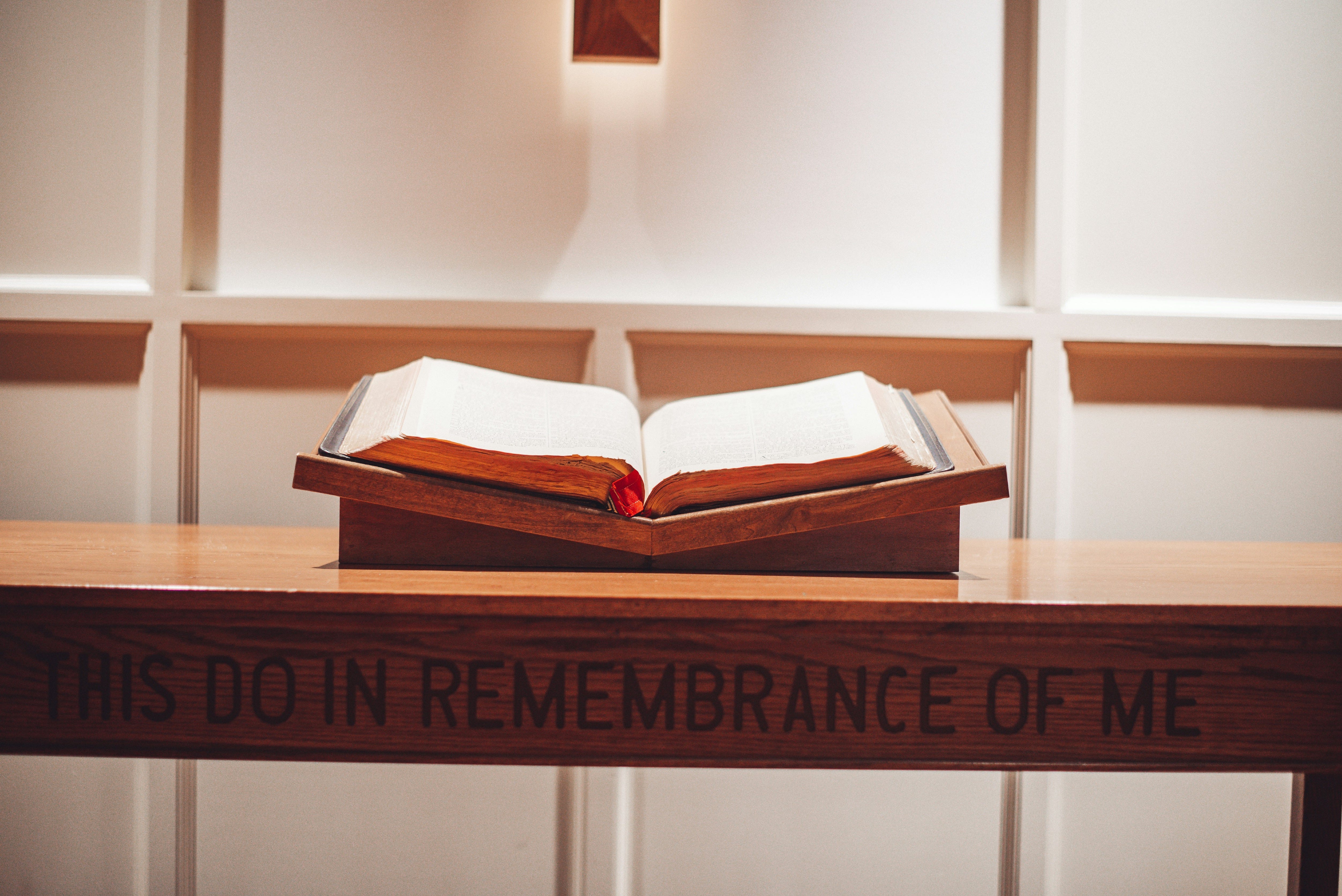
“I can see your social security cards in the mail, I can see your green cards!” The Pentecostal evangelist announced this to my family from the stage in a small Spanish-speaking Black and Brown Pentecostal church in South Toledo, Ohio. I was 15 years old, yet I can still see the stage and the man claiming to have a vision from God.
I experienced my first heartbreak at 10. It was the day my mom sat my sister and me down to tell us that my papi had moved to the United States and wasn’t coming back. Though it was the year 2000, technology wasn’t easy to access, even from a metropolis like Lima, Peru. Once or twice a week, we would go to the ‘cabinas de internet,’ where my mom would pay two or three soles per hour to use the internet. My sister and I loved going. It gave us a chance to email our papi and play a Lion King computer game afterward.
This became a sort of weekly ritual for my family, but my favorite day was Sunday. We didn’t have a home phone, so we would go to my tia’s house where my dad would call after lunch. I later found out he would call us from a pay phone somewhere in Washington, D.C. Even when it was freezing cold outside, he’d still call.
It wasn’t until a year later that we reunited with him in a tiny domestic airport in the Midwest of the United States. I’ll never forget the moment I saw my papi for the first time. Nothing could erase the year we were apart, but the fragmentation was contained, even if only for a moment.
I missed Lima every day, the food, the fresh fruit from the markets, the sound of salsa coming from every other building, the Pacific Ocean. I even missed the loud announcements from the street vendors early in the morning. Most of all, I missed my family, my home, the feeling of not being scared. I knew we were poor in Peru, and we were technically poor in the United States, too, but in this country, we didn’t have to split two bananas in four so that each of us could have a little bit.
My heartbreak shifted as I attempted to learn a new language and acclimate to the cold and snowy winter days. My body began to process that this was the place I was supposed to call home now, except that this country, as a nation-state, had not welcomed me. Becoming undocumented became the deepest wound I would carry.
By the time the Pentecostal preacher had his so-called vision, I’d been living in the United States for four years and wanted nothing more than to believe him. Looking back, I understand his hopeful prayer; yet, in other ways, there is a kind of cruelty in telling a child who’s looking for belonging anywhere she can find it that what she’s prayed for most can miraculously come true. The old proverb says, ‘hope deferred makes the heart sick,’ but for me, it is legality deferred that makes me sick.1

Legality for a Black immigrant is not simply a matter of belonging and justice within the current iteration of the U.S. Citizenship and Immigration Services (USCIS). The history of legality for the commodified Black body begins long before one migrates to the United States and requires a joining of solidarity with Black United Stater communities.2
Illegality is not a new concept for Black Latin American and Caribbean migrants. To be a Black Latin American person is to know the story of migration and displacement intimately. Even before moving to the United States, our ancestors had been forcibly displaced to be enslaved in Abya Yala.3 Not only did they experience separation from their families, people, and their home countries, but once they arrived on these shores, they were separated again as they were taken to the mainland of Latin America. The life of a Black Peruvian person is marked by systemic erasure, violence against the body and soul, and the commodification of one’s culture.
Moving to the United States doesn’t erase this history. In some ways, it intensifies our familiarity with displacement, setting it in our bones once again. Our collective memory recalls the stories of family separation that we’ve held under our breath when we can’t voice them out loud.
Many studies continue to collect data regarding deportations, detentions by Immigration and Customs Enforcement (ICE), police brutality, incarceration, and the disparities Black migrants experience at the intersections of country of origin, gender identity, sexuality, disabilities, education, religion, etc. These studies continue to provide important quantitative data, yet we cannot forget that the first people to experience this kind of violence were Black United Stater communities.
In the case of Dred Scott v. Sandford (1857), the Supreme Court deliberated that Black United Staters were not citizens, confirming that they had no constitutional protections or rights.4 While the case wasn’t originally about citizenship, this moment was significant because those who were enslaved at the time were born in the continent of Africa as well as what is known as the United States. Essentially, the nation-state created statelessness as a form of domination even outside of the system of slavery.
When a body, when a life, is made illegalized by the nation-state, what are the stories the body continues to hold? Where does one find belonging when every system built in this country wasn’t created with our flourishing in mind?
It is within these confines that I am reminded that while the state continues to create violence against the inherent dignity each person carries, we come from a people who make a way out of no way. I am reminded of how Black United Staters have lived and continue lives of fugitivity. They have continued to create life, art, culture, memory, and histories without the state’s permission. Christina Sharpe names fugitivity as “a powerful way to imagine black life that persists in and in spite of.”5 In and in spite of, Black United Staters have created belonging for themselves.
To experience the United States as a body, spirit, and soul that has been illegalized by the state requires living a life hidden in plain sight. Fugitivity is essential to our survival, and requires us to create webs of care unknown by the state. This isn’t a new concept for immigrant communities, for migrants, and refugees; it is, after all, how we’ve survived for so long. When the nation-state calls for our dignity to be stripped away, it is our duty to commit to the flourishing of ourselves and our communities. What dreams have been dreamt before we got here? How can our resilience guide us in imagining worlds where the wound of illegality is no longer passed down to our children and neighbors? We are a people who come from artists, storytellers, healers, dancers, and intellectuals. Imagination is in our history, too.
There is a specificity to both Black United Stater life and Black Latin American and Caribbean migrant life. They can never be the same. Even the clustering of Latin America and the Caribbean requires its own specificity, as each country retains its distinct history and culture. This isn’t a call for homogeneity; it is a call for solidarity and an understanding that our histories are intertwined.
I have been asked to recall so many memories, but as Lucille Clifton writes, I keep remembering mine. The heartbreak of displacement and illegality continues to be held in my hands, but it is no longer my only memory. I remember the fugitivity of those who’ve come before me and those who will come after me. I hold the memory of once belonging to my country, and my land, my little bit of Pachamama. The papers didn’t miraculously come in the mail, but my belongings were no longer dependent on them. I belong to my peoples, my communities, my families, and my friends. I belong to the earth and the oceans who’ve held me in the story of displacement. I belong to myself.
Notes from guest judge, Julissa Arce Raya: The internet cafés, the Sunday calls from a pay phone, that gut-punch of a Pentecostal preacher promising green cards from the pulpit….This is writing that transforms the theoretical and political into the personal and provides a powerful reminder that papers don’t produce belonging.
Karla Mendoza Arana is an interdisciplinary Afro-Peruvian artist, scholar, writer, and activist. She is a grassroots theologian and a forever student of liberation theologies. Karla grew up in Lima, Peru and the Midwest of the United States. Karla holds a Master of Arts in Religion from Union Theological Seminary, with a concentration on Migration and Religion in the Afro-Diasporic Experience.
She loves finding new coffee shops, dancing salsa, cooking Peruvian food, laughing, and rooting for FC Barcelona.
Attridge, Harold W.; Society of Biblical Literature. HarperCollins Study Bible: Fully Revised & Updated – The Authoritative Ecumenical Edition from the Society of Biblical Literature (p. 2939). (Function). Kindle Edition.
Borrowing from Paul C. Taylor’s identifier term for those who are born in the nation-state of the United States, I use this term to disrupt the ideology of American exceptionalism.
Abya Yala is used today by Indigenous ethnic communities in North and South America to refer to the landmasses generally known as the Americas/America. (https://library.cfa.harvard.edu/abya-yala)
“Dred Scott v. Sandford (1857),” https://constitutioncenter.org/the-constitution/supreme-court-case-libratory/dred-scott-v-sandford
Christina Sharpe, “Black Life, Annotated,” The New Inquiry, August 8, 2014, https://thenewinquiry.com/black-life-annotated/
 | A guest post by
|
oh this floored me. gorgeous, gorgeous writing.